
Find the latest new blog entries from now on at: https://en.cozify.fi/blogs/articles?view=blog
Thursday, November 18, 2021
Cozify Blog has a new address
If you are interested in smart home and building automation, follow us, comment and share our blog.

Wednesday, October 13, 2021
Three trends in smart buildings and smart homes - the 'new normal' where everyone benefits
This blog has been written by Cozify CEO Kimmo Ruotoistenmäki.
Smart buildings and smart homes are rapidly becoming the "new normal". In the longer term, all parties will benefit from this development – residents, owners, construction, and real estate professionals and, of course, the environment. There are three trends behind the development, which I will go into more detail below.

Trend 1 - Smart homes are already relevant to mass consumers
You don't have to be a computer geek or a rich detached homeowner with the latest expensive technology to have a smart home. I mean smart in the context of bringing technological solutions to a property, thereby improving the environmentally friendliness of housing and making it more human-centric.
An increasing number of consumers are interested in the smart home's potential to improve the comfort, safety, and energy efficiency of housing. Based on my experience, I dare say that around 30% of consumers know how to demand smart solutions from a developer or property owner in their home. The only challenge in this equation is that while construction professionals already have an interest in building smart properties, most lack a deeper understanding of their benefits. Also lacking is an awareness of what they should do and who could help them to get the right kind of secure solutions. I’ll admit that there is also a place for me here to look in the mirror.
The great thing about increased consumer interest is that the supply of smart home solutions has increased. Smart home installations are no longer individual pilots, rather now different operators have standardized their own delivery concepts. An example of this is that a builder can standardize smart solutions as part of their HVAC plans. Standardized delivery protects builders and property owners as construction legislation requirements and the requirements of residents increase. The property owner benefits from standardized cost-effectiveness in construction and renovation projects and, at a later phase in the life cycle, through increased property value. This brings us to the next trend of incentives and regulation in the construction industry.
Trend 2 - Legislation requires increased smart technology and climate-friendliness
The Finnish State and the European Union have increased incentives and regulation related to the climate-friendly nature of buildings and housing. Depending on the calculation method, construction and real estate generate almost 40% of all CO2 emissions in the world (Construction Industry RT ry). The aim of the regulations and incentives is to support our journey towards carbon neutrality. The impact can already be seen from the increased interest of property owners and financiers in energy-efficient construction.
An example of regulation is the Water Consumption Individual Billing Act, which is the background to the European Union Energy Efficiency Directive. The Water Consumption Act applies to new buildings and multi-dwelling buildings due to be renovated, which must have the possibility of remotely reading water consumption meters per dwelling. The act also requires that the water bill for housing companies is based on measuring consumption per dwelling in the future, and the bill consists of the amount of water used and the amount of energy used to heat it. Another example of new regulation relates to energy communities, which I already wrote about in a previous blog.
But builders and property owners can only respond to regulation if they have smart construction and home technology under their control. Most of them don't have the technology yet. An additional challenge is that smart technology is installed in product-specific silos and building technology systems can very much overlap with each other. For example, one may have several different temperature controls; one for underfloor heating, one for air circulation cooling, etc. In this case, the technology rises against itself, eventually causing a headache for all parties involved. This brings me to the third trend of security.
Trend 3 - The alliance of technology, intelligence and security must be strong
In a smart home, systems are connected via the internet. This is a huge opportunity, but at the same time a big danger if technology and smart devices are not up to date. Traditional building technology is typically thought to be "safe" from the dangers of the internet or hostile hackers, without any specifically thought-out protection. The reason: systems have been local with no contact outside the building.
Today, the situation is different - old and new systems are increasingly being connected to the web for remote monitoring and management. If data security is not considered both in product design and in the design and installation phase, traditional solutions will be particularly vulnerable to the dangers of the internet. I see that real estate technology as an industry may not recognize these dangers or know how to protect against them.
Of course, the consumer, or even the builder, cannot begin to know all the technical details regarding information security, nor do they need to understand it in depth. One good example of progress is Traficom's security label, which has been established for this need. The brand guarantees to the customer that the security of the product has been genuinely considered. I would love to see that the Information Security Label and similar concepts would help both builders and consumers to choose genuinely reliable secure solutions.
We will delve into the above trends in even more depth in our upcoming blogs. I believe that these themes really matter towards establishing the "new normal" of a smart building and home.

Kimmo Ruotoistenmäki
Cozify, CEO
If you are interested in smart home and building automation, follow us, comment and share our blog.
Monday, September 20, 2021
Energy communities are key to the smart electricity grid of the future
Kimmo Ruotoistenmäki, CEO of Cozify, opens his blog with why energy communities are currently a hot topic.

Energy communities are currently a hot potato in the industry. If you are not familiar with the term itself or why the topic is being discussed right now, then let me begin with an overview of the phenomenon.
Single-family households have long been able to produce their own electricity with, for example, solar panels and sell any excess electricity to an energy company. For housing companies, the transition to self-produced solar power has been slowed down by legislation that has made it difficult to utilize the electricity produced other than for communal use. Solar panels have therefore not reduced the electricity bill for housing company residents since self-generated electricity can only be utilized in common areas such as corridors and shared rooms.
It has come down to profitability. Solar power plants haven’t been interesting investments for housing companies, as after the electricity tax and the electricity transmission fee, self-generated electricity would be more expensive than “ordinary” electricity.
The energy community – a housing company producing its own energy
Now things are different. The new legislation, which came into force at the beginning of 2021, will enable residents of blocks of flats and terraced houses to combine electricity production and consumption and distribute the benefits of surplus production to residents. This is guaranteed by the energy community.
The energy community is a form of sharing economy in which the shareholders of a housing company share the benefits of electricity produced with solar panels amongst themselves. The shareholders therefore set up a local energy community within which electricity produced by a non-financial company can be distributed to the community members without any administrative or network costs.
The result? Cheaper energy.

And looking at the bigger picture, so much more.
The smart energy network – virtual power plants meet demand
Because there is currently a great need for renewable energy production, I see a lot of potential in the energy community. As we move away from fossil fuels, electricity use will increase. Or rather, the proliferation of new technologies means that everyday life becomes ever more dependent on electricity. Electric cars are becoming more common, as are solar and wind turbines in housing communities.
This change is pushing us towards smarter energy consumption, where energy communities will play a major role within the electricity system. By this I mean that, as energy communities grow in the future, they will have the potential to become virtual power plants with the capacity to produce, sell, buy - and even store energy during a profit spike. It should also be noted that the virtual power plant does not focus solely on electricity network solutions. Ideally, the solution manages and optimizes the sharing of several forms of energy, such as mains power, solar power, and district or geo-heat.
The virtual power plant balances the total energy production needs and network load by, at certain times, using less energy from the grid. For example, on a frosty day, when energy needs are at their highest, the property uses energy stored in a heating well instead of expensive mains electricity, and perhaps even receives compensation from the network operator.
Building demand-response into the energy community is a very high priority for Cozify. We want to be involved in building a smart energy network where efficient tech solutions can control household energy consumption without compromising everyday comfort. At the same time, the balance of the entire energy system is maintained. In this way we are doing important work combating climate change.
Energy for autumn!
Kimmo Ruotoistenmäki
Cozify, CEO
PS. If you are interested in energy communities or building a site with demand response and rational energy production at its core, please call me on 040 352 8898 or email pro@cozify.fi and let's talk some more.
If you are interested in smart home and building automation, follow us, comment and share our blog.
Tuesday, September 5, 2017
The first Smart Home Insurance in Scandinavia
 LocalTapiola and Cozify have launched the first Smart Home Insurance in Scandinavia. The combined product offering consists of the Smart Home Insurance by LocalTapiola and the LocalTapiola Smart Home bundle offered by Cozify.
Background for the launch
LocalTapiola contacted Cozify to set up a smart home pilot with their consumer customers after pioneering a smart life insurance product. The pilot was kick-started within a month and it was conducted during 2016. The objective was to gain an insight into the preferences of ordinary consumers in terms of connected devices and what could be the role of the insurer in introducing smart home benefits.The results of the pilot were encouraging: customers liked the idea that the insurer becomes more proactive companion in life instead of a reactive compensation provider when the accident has already happened. In addition, a lot of other new service ideas for future development were born in the co-creation sessions.
The Cozify smart home solution

Today’s launch is the first in the Nordics that combines extensive home insurance protection with an open smart home system that warns the customer automatically when something bad is about to happen. In the case of a water leak, fire or burglary, it is essential to identify and limit the damages as early as possible. The customer gets a notification into the smartphone with clear instructions what to do and where to call to get the assistance of LocalTapiola emergency service personnel.

The basis of the LähiTapiola solution is the standard Cozify smart home product but the companies have jointly planned custom behavior to optimize the customer experience. This way it is possible to maximize the benefit for the insurance business.
Towards usage based insurance
Many insurers strive to offer usage based solutions to their customers. Examples include an auto insurance where the insurance premium is determined by the driving habits by the use of telematics. This attracts buyers that are likely to be cautious and conscious about security. In home and property insurance, the smart home hub can be used as the telematics equivalent to enable learning about the factors that affect risk profiles and to provide additional value to customers. Cozify supports streaming of near-real-time data either in raw format to be analyzed in the systems of the partner or alternatively Cozify can create custom dashboards where the data is presented in the preferred format.About the companies

Cozify is a Finnish smart home technology company that works with service providers to boost their core business by utilizing the latest IoT technology and resulting data. Cozify smart home is an open system that can be customized to support the business drivers of our channel partner. The most popular use cases are to increase security of homes, automate lights and entertainment and improve energy efficiency. For more information about partnership opportunities, please see the Partners page.

If you are interested in smart home and building automation, follow us, comment and share our blog.
Tuesday, March 21, 2017
What does IoT mean for your consumer business?

Question: To warmup a bit, could you please tell us a bit about your role here in Cozify?
Antti: I am responsible for business development, which in practice means working with our channel partners to introduce smart home solutions to their customers.
Question: Internet of Things (IoT) has been around some time and the hype around it has been huge. Why IoT is relevant to me?
Antti: IoT affects our everyday life already today, even though we don't necessary recognize it. For businesses, IoT is a huge megatrend that is sweeping across industries creating opportunities for increased operational efficiency and data driven business logic.
From the consumers point of view, for example TV's, amplifiers, speakers, game consoles are connected to the internet. It starts to be difficult to buy devices that are not somehow connected. The issue is most of them are point solutions that are good in the one thing they are designed for. This results in a clutter of apps in the smartphone and none of them interact with each other, thus wasting a lot potential benefits.
Question: What kind of benefits do you mean?
Antti: Well, you may already have a wireless multi-room speaker system, such as Sonos. And then you might have a Belkin Wemo motion sensor. Wouldn’t it be nice to make them play together? You would want to turn on the music when you walk into the kitchen at a time when you typically prepare food. Or play a loud dog bark when you are not around and there’s movement on the porch.
Obviously just the imagination is the limit once you start exploring the possibilities. Use cases can range from convenience to security to energy efficiency. For example, motion sensors are very handy in many cases: it is possible to automate lights as you move around the house and have the right kind of light based on the time of day/sunrise/sunset/darkness level. Or movement can trigger video recording if nobody is supposed to be at home.
Question: I’m interested in saving energy. How can I do it without compromising comfort?
Antti: If you have an air-to-air heat pump (like they are called here in Scandinavia) or an air conditioner, you probably don’t want the AC to run when the door has been left open for more than a minute. Or only heat the room or house when somebody is around. When devices are connected, everything happens automatically and best part is, it is remarkably easy to adjust rules and scenes whenever you want.
Question: What about data security?
Antti: That really is a hot topic and it makes sense to have a bit of patience to look at the implementation. Some systems rely entirely on cloud services, i.e. all the data is transferred to a remote server, which then determines what should be done with it. This could be a bit of a risk if you value your privacy or reliability of the system. I would recommend looking at products that are based on a hub that resides in your home. This way it is possible to make it more secure and much more responsive as it doesn’t rely on your internet connection.
To ensure everything is in order from the security point of view, we conduct security audit at least once a year, where third party company completes a full security review of our backend, hub software and mobile application. If issues are found, everything is fixed and audit is done again. This way we can be sure all possible issues are fixed and the security is not compromised.
Question: Can service providers benefit from IoT?
Antti: Yes, definitely. It is possible to start offering smart home as a service to your consumer customers and complement your current offering. Once your customers get used to the perks of the system, it is unlikely that they want to churn to another service provider. This way you can increase customer stickiness and be relevant in their everyday life. There is strong evidence that this increases your Net Promoter Score.
Question: Great! Are there any other benefits?
Antti: There are examples where the core business benefits directly from the smart home. Take e.g. the insurers: they can offer their customers an open smart home system that is making their life more comfortable every day while protecting against water leaks, fires and burglaries. The insurer saves on the number and value of claims and can proactively take care of repairs if the damage happens.
It is also good to remember the IoT derived data is the potential bonanza for the service providers. With careful analysis, it is possible to segment your customers very specifically and offer only relevant services to them. For the insurance industry, this paves the way towards usage based property insurance products. However, one must be extremely conscious about communicating the benefits the consumer can expect in exchange of submitting data generated in his home to a 3rd party. Naturally, we don't share our users' data in any way without asking permission to do so from our users. And all shared data must be anonymized anyways.
Question: Sounds interesting, where can I find out more?
Antti: Cozify is a Finnish consumer IoT startup that has developed a full-stack smart home solution. We sell our solution directly to consumers while building our channel partner network internationally. If you’d like to learn more in your consumer role, feel free to explore our website http://en.cozify.fi/. For your business needs, just head to http://en.cozify.fi/pages/for-partners or request a meeting with me (antti@cozify.fi).

Antti Vihavainen
Business Development & Sales, Cozify Oy
Business Development & Sales, Cozify Oy
If you are interested in smart home and building automation, follow us, comment and share our blog.
Tuesday, March 7, 2017
ZigBee devices - Overview

One of the most popular technologies for wireless smart home communication is ZigBee, Z-Wave being its closest competitor. Both are several generations ahead in features compared to the classic radio based wireless remote control devices that operate e.g. on the 433 MHz radio band.
ZigBee offers a robust communication channel between the devices so that each message can be either delivered successfully or the failure to do so is detected and reacted upon. Another great advantage is the mesh networking capability where each mains powered device propagates and routes the messages to extend the range of the Zigbee network.
ZigBee radio operates with low power consumption which enables the devices to be running on batteries. The radio communication is encrypted to secure your home from hackers or from unintentional controlling.
Cozify & ZigBee
We at Cozify have had good experiences with ZigBee devices in general. All devices are tested thoroughly before official support is announced. Recommendations are only given to devices that are proven to work reliably.Here are our top-3 ZigBee device recommendations of March 2017:
Philips Hue Lights


Philips Hue Motion

Osram Lightify Plug

Tips'n'Tricks
Before moving into solving problems and issues, it is important to emphasize the easiness of installation and use, and most often design of modern ZigBee devices. In most cases, ZigBee devices are reliable. However, like with everything where software is involved, we sometimes face problems and need a few useful tips to recover.
- Once taken into use, Zigbee devices are rather reliable. But in case issues are faces, first thing is to check, and if needed, replace the battery.
- This is simple and sounds obvious, but bring the device closer to the hub. If this improves the reliability, then either the distance between the device and the hub is too long, or the signal is blocked by for example a wall.
- Always ensure that all your Zigbee devices are on. Sometimes lamp or bulb is switched off, which means the mesh network might get broken. If the lamp which is switched off is crucial node of your mesh network, other devices connected to the hub through these devices, will be unavailable.
- Sometimes the Zigbee mesh network needs to be rebuild. Devices don't always route the signal from and to the hub optimal way. To rebuild Zigbee mesh network, turn all your Zigbee devices on, unplug the Cozify Hub, and leave it off 10 to 15 minutes. This is something that might help if newly added devices don't work reliably. Or if issues begin when you change the location of your Zigbee devices.
- A bit more advanced way to do troubleshooting is to ensure the Zigbee channel the hub uses is as free of wifi networks as possible. Please check out this article for troubleshooting tips. If channels collide, try changing either the hub or wifi router channel as far from each other as possible. The channel Cozify Hub uses can be changed from the Cozify app (settings). Note, that if you change the Cozify Hub Zigbee channel from the app, you must re-pair all your Zigbee devices.
Security of the technology
Even with encryption all the wireless devices suffer from the fact that the radio signals can be jammed by skillful hackers. Then it is up to the system’s design to decide what happens when a device becomes unreachable; does it make an alarm or just plays “robust” to device failures and ignores them. The security of Zigbee devices in general is good. For the absolute highest level of security (and reliability), we suggest installing wired sensors, for example FutureNow relay units, for places that are prone to attract skilled burglars. For the rest of us, the wireless sensors are great for keeping the home secure from unwanted visitors.ZigBee vs Z-Wave comparison
Although very similar, there are a few differences between the ZigBee and Z-Wave technologies. The prices have come down a lot over the past few years on both device families, and they will continue to drop, but still the Z-wave devices are a bit more expensive. For the money, the end users have enjoyed a better interoperability between the Z-wave certified devices. ZigBee is an open standard and the increased competition has had an impact on the pricing.ZigBee uses the same radio channel as WiFi and can therefore potentially cause interference. Z-Wave uses unlicensed radio bands that are different in EU and USA due to their regulations. That’s why the end users' needs to select the correct version of their devices. On paper Z-wave has a slightly longer range and ZigBee has a higher data rate, but in real-life these differences are not noticeable.
Both protocols have evolved during the past years to be closer to each other in feature wise. In the end, it boils down to the support available in the selected smart home system. At this very moment, the Cozify Hub supports ZigBee out of the box and the support for the Z-Wave is coming soon. The hub has already all the needed hardware inside, so only a software update is needed for all the existing Cozify users to begin using Z-Wave devices, once it is available.
Read more about Cozify Hub and supported devices from our home page, www.cozify.fi
If you are interested in smart home and building automation, follow us, comment and share our blog.
Thursday, March 2, 2017
Cozify, Rosendal Real Estate and TMPL have built 1st fully cozified apartment building to Uppsala, Sweden

Finnish startup company Cozify Oy has today announced exciting news about 1st apartment building project called Tiunda Park built by Rosendal Fastigheter, Sweden, to include Cozify smart home features and functionalities in all 34 apartments. Cozify offering complements TMPL solution, that offers ways to inhabitants to follow electricity and water consumption, and be in touch with neighbors, landlords and service providers from the area.

Cozify Hub and a set of high quality smart devices, including motion and fire detectors, door sensors and wall switches, were installed and configured in building construction phase. “It is important to take into consideration the needs of both residents and the landlord. Residents need a modern, easy to use and safe home for all family members. Whereas the landlord needs to handle issues like changes in user privileges when people move in and out.”, says Cozify founder and CEO Kimmo Ruotoistenmäki. “During the past year, there has been an increasing demand to add support for devices, like relays, to serve the needs of builders. This is definitely an interesting new business area for us”, he continues.
“We were looking for a modern and robust solution that is easy to integrate with our own TMPL platform and the mobile app. Building management and apartment level user privileges control were important selection criteria for us. With Cozify, we can provide highly appreciated increased security level for our customers. Open platform and extensibility were also important topics for us. We evaluated several different home automation entities, and found out Cozify fulfilled our needs best.”, says TMPL CEO, Eric Anderbjörk.

---------------
Cozify Oy is a Finnish startup company founded in March 2013, that offers home automation platform and toolset to fulfill increasing and fast growing home automation demand from both consumers' and different businesses point of view. Cozify is headquartered in Espoo. Team behind the company has been responsible for the creation of several successful companies and service concepts. http://en.cozify.fi
TMPL Solutions AB develops digital solutions for safe and environmentally friendly housing and living environments, with a focus on sustainable urban planning and community development. TMPL is a subsidiary of the Rosendal Fastigheter AB, based in the Uppsala/Stockholm area. The company was founded in 2015 and has 12 coworkers. Read more on www.tmpl.se

Additional information:
Kimmo Ruotoistenmäki, CEO, GSM. +358 40 352 8898 / kimmo@cozify.fi
Eric Anderbjörk, CEO, GSM. +46 706 200107 / eric@tmpl.se
If you are interested in smart home and building automation, follow us, comment and share our blog.
Thursday, February 16, 2017
Cozify News: Security Challenge 2016 - Summary

Cozify participated the Information Challenge finals hosted by Finnish Communications Regulatory Authority November 2016. Event was part of Junction Hackatlon -2106, where tech enthusiasts meet, design and develop ideas into actual projects with like-minded hackers. Cozify and a few other companies gave their smart home hub and supported devices for the teams to hack. The target for each team was to find as many security vulnerabilities as possible during the given time.
The results were as we expected. The feedback we received from the teams was excellent quality and most importantly, the teams could not break the security of our system during the event.
“It was interesting to follow how different teams work. I think it is important to offer challenges like this for talented and extremely professional young hackers to really show what they can do. Good result was not a huge surprise for us. We audit all components of our solutions at least yearly, including Cozify Hub, Cozify application, and our backend systems. Security is top priority for us and have been taken into consideration from the begin.”, says Kimmo Ruotoistenmäki, CEO, Cozify.
This was the first-time Security Challenge event was organized. “We are happy to join security challenge event also in the future, if such events are arranged. To challenge yourself and the way how you work time to time is always useful. And if security issues are found, it is better to find possible those in controlled environment and fix immediately, compared to some vague notifications. This was a great event and we want to thank Finnish Communications Regulatory Authority for taking care of all the arrangements.”, he continues.
The aim for the security challenge was to challenge teams to solve information security related questions and search vulnerabilities from different kind of systems; devices, applications, backend systems, and combinations of these all. “Security challenge was a huge success, not only because teams were talented and highly professional, but also because of great support from companies who joined the challenge. During the event it was obvious, that there are huge differences between companies and products in means of security. Companies coming from Finland tend to take security more seriously compared to other similar companies. Still, there are always something need to be improved, and companies must develop their own security competence all the time.", says Jarkko Saarimäki, director of cyber security centre, Finnish Communications Regulatory Authority.
Espoo, 16. February 2017
If you are interested in smart home and building automation, follow us, comment and share our blog.
Thursday, February 9, 2017
433 MHz devices - Overview
433 MHz devices have their place in today's home automation space. Simple and straightforward technology enables low-cost devices, but is also vulnerable to security and reliability issues. These problems can often be avoided, as long as you keep in mind a few basics.

In the autumn of 2015 Cozify added support for a selection of Nexa and Proove sensors and smart plugs that operate on the 433 MHz frequency. That lead to a steep increase in the sales to consumers. At the beginning of 2016 we were very happy with the choice we had made: our customers were able to reap more benefits from the devices they had already acquired and it significantly lowered the threshold to start using the Cozify Smart Home. In appropriate use, they are handy and worry-free.
However, as always, there are reasons for low cost. The 433 MHz devices are not based on any common protocol as all manufacturers have to come up with their own protocol or loan it from their neighbour. Partly due to inexpensive components there is quite a bit of variation in the implementation of the protocol even between two devices that should be the same. This has resulted in significant amount of unexpected work, which has in turn delayed some other projects. Implementation of Z-Wave support is one of them, unfortunately.

All 433MHz devices that we have encountered so far are only capable of one-way communication. I.e. the smart plug can only receive a command to turn on or off, but cannot acknowledge that the command has been executed. Therefore, the Cozify Hub must assume the state of the device, which is not optimal. In practice, hub commands plug five times "Turn the plug on", but cannot verify from the plug if the message was really received.
Some 433 MHz devices only send their status into the air. For example, the thermometer transmits the data once every minute regardless of the traffic in the same frequency at that moment. This leads to mixing of the messages as more 433MHz devices are added to the system. Hub cannot ask from the thermometer what the temperature is, but have to wait until the value is sent next time, meaning after a minute or so.

Cozify Hub prioritizes listening to the traffic instead of sending. We recently visited the home of a customer where the 433MHz devices were practically unusable. They randomly worked, but always with a significant delay. Using a sniffer, we found out that the cable modem wall mount sent disturbance on a wide frequency band, thus jamming Cozify to listen to possible messages. By moving the Hub by 1,5 meters the system became fully functional.

433 MHz frequency devices work well, as long as the technology used by the restrictions are taken into account. Positioning the motion sensor is careful, because if the motion detector continuously detects motion, it covers other 433 MHz devices signals thus making it impossible for the hub to receive or send commands to other 433 MHz devices. Positioning devices is important, because signal must go through from the hub to the device, and vice versa. Depending of the device type. Changing hub or device place a bit, might make a huge difference in reliability. In general, the case survives by experimenting and observing the situation on the ground.
Order Cozify newsletter Order Cozify newsletter to stay on top of our latest news.
In the autumn of 2015 Cozify added support for a selection of Nexa and Proove sensors and smart plugs that operate on the 433 MHz frequency. That lead to a steep increase in the sales to consumers. At the beginning of 2016 we were very happy with the choice we had made: our customers were able to reap more benefits from the devices they had already acquired and it significantly lowered the threshold to start using the Cozify Smart Home. In appropriate use, they are handy and worry-free.
However, as always, there are reasons for low cost. The 433 MHz devices are not based on any common protocol as all manufacturers have to come up with their own protocol or loan it from their neighbour. Partly due to inexpensive components there is quite a bit of variation in the implementation of the protocol even between two devices that should be the same. This has resulted in significant amount of unexpected work, which has in turn delayed some other projects. Implementation of Z-Wave support is one of them, unfortunately.
All 433MHz devices that we have encountered so far are only capable of one-way communication. I.e. the smart plug can only receive a command to turn on or off, but cannot acknowledge that the command has been executed. Therefore, the Cozify Hub must assume the state of the device, which is not optimal. In practice, hub commands plug five times "Turn the plug on", but cannot verify from the plug if the message was really received.
Some 433 MHz devices only send their status into the air. For example, the thermometer transmits the data once every minute regardless of the traffic in the same frequency at that moment. This leads to mixing of the messages as more 433MHz devices are added to the system. Hub cannot ask from the thermometer what the temperature is, but have to wait until the value is sent next time, meaning after a minute or so.
Cozify Hub prioritizes listening to the traffic instead of sending. We recently visited the home of a customer where the 433MHz devices were practically unusable. They randomly worked, but always with a significant delay. Using a sniffer, we found out that the cable modem wall mount sent disturbance on a wide frequency band, thus jamming Cozify to listen to possible messages. By moving the Hub by 1,5 meters the system became fully functional.
433 MHz frequency devices work well, as long as the technology used by the restrictions are taken into account. Positioning the motion sensor is careful, because if the motion detector continuously detects motion, it covers other 433 MHz devices signals thus making it impossible for the hub to receive or send commands to other 433 MHz devices. Positioning devices is important, because signal must go through from the hub to the device, and vice versa. Depending of the device type. Changing hub or device place a bit, might make a huge difference in reliability. In general, the case survives by experimenting and observing the situation on the ground.
Pros
- Inexpensive devices
- Simple technology to implement
- Widely used technology
- Devices been in the market for some time
Cons
- One-way signal traffic (hub is not able to confirm or ask device state
- No agreed standard between device manufacturers
- Sensitive to interference
- Signals to and from the device cannot be encrypted
Order Cozify newsletter Order Cozify newsletter to stay on top of our latest news.
If you are interested in smart home and building automation, follow us, comment and share our blog.
Thursday, February 2, 2017
Cozify and security - our approach
In the latter half of 2016, the general media started publishing articles about the security level of the IoT devices. There was also a story (case Mirai) about a massive bot attack that used millions of cheap Chinese IP-cameras to block the internet traffic and caused some of the biggest Internet services to go down for a while. Furthermore, a group of hackers used drones to hijack Philips Hue lights in November 2016. In this post we explain our approach regarding the security issues. Keep on sending comments and questions to us, we are more than pleased to help and reply.

Cozify uses the internet connection to enable remote access for the users to control their devices and to update its own hub software from time to time. However, the architecture has been built in a way, that Cozify Hub can control devices at home without an internet connection. This way the home owners don't have to rely on their internet connection.
All the traffic that goes through Cozify to the internet is encrypted. We use JWT-token based technology to identify authorized users' devices from the unauthorized ones.
To ensure that the Cozify security is on the required level, our solution; meaning the application, the hub software and the backend, has been designed in co-operation with industry security experts. To ensure the level of security is at the best possible level - we also conduct a security audit at least once a year. The audit is done by 3rd party independent professionals.
In addition to the audits, we participated in a security challenge arranged by the Finnish Communications Regulatory Authority in November 2016. The main idea was to give our hub software, application and backend to teams of security experts all around the country, which then tried to find and break the security measures in all possible ways. The teams did find some minor issues, but no serious vulnerabilities were not found. We consider that as a good result. On a side note, we have already fixed the found issues.
Redundant backend
Like most of the companies today, we don't have our own datacentre to run the servers required by our back-end systems. We are currently using Amazon’s data centres in Ireland for IaaS (Infrastructure-As-A-Service). Amazon guarantees 99.95% availability for the E2 and we’ve had very good experiences with Amazon over the years with only one service outage in five years. It is important to keep in mind though, that it's much more important to have a redundant and scalable setup, than a high SLA for a single server or a single location.
Data privacy of the Cozify users
Our customer data is stored on Amazon's European data centres that have more strict security policies and conditions than for example the servers located in US. All our employees and subcontractors have signed a confidentiality agreement, and our core developers have a Security Clearance with the Finnish government.
We examine anonymous log data to improve our service and to run overall health checks, and to fix bugs. We look into customer data only when its required. We always ask for permission or inform the user if we access hub log files.
We do have plans to utilize data we collect from our users, but that will be strictly anonymised. One possible scenario for user data usage is to compare for example heating stats between different users. Or how certain rules or devices have been used. It is important to note that all such data mining is anonymised when we are looking for trends in these kind of scenarios.
All in all, we will communicate our privacy policies as clearly and transparently as possible, and ask for permission from the user to use of their data.
Conclusion
We follow and measure all the possible latest security aspects you can expect from any service holding some of your personal data. On that regards, your data is in good and safe hands once the data reaches our service.
The question you might have is, that if Cozify ensures the security from Cozify’s end? What about other IoT devices that are connected to Cozify Hub? The base rule is that the more advanced technology the device is built on, the higher standards it also has out of the box, in terms of security.
Out of the devices that Cozify supports, the more affordable 433MHz devices have the lowest security level. The ZigBee, WiFi, Z-Wave and Bluetooth devices are more secure in general. The level of quality and security often goes hand in hand.
For additional in-depth interview with Kimmo, our CEO, about the subject, visit the interview conducted by wccftech.com here: http://wccftech.com/review/launch-review-cozify-smart-home/2/
If you are interested in smart home and building automation, follow us, comment and share our blog.
Tuesday, November 8, 2016
A cozier and a more energy efficient home - air conditioner support published!
It is great to publish heating and energy efficiency related new features in autumn. Controlling an air conditioner using a Cozify Hub has been on our customers' wish list for a long time. Now it's possible! I've pointed out here the basics of how to take AirPatrol into use, and what kind of new and exciting features we support for it.
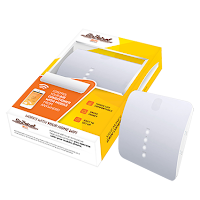
Tip: Always before pairing 3rd party devices with Cozify hub, ensure that the device is working as expected using the manufacture's own mobile application.
When the AirPatrol WiFi is installed, you can pair the device with Cozify Hub.
Pairing is done by following these steps:
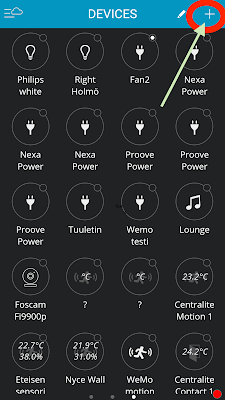
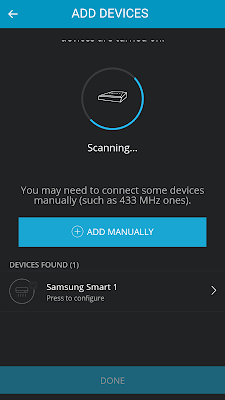
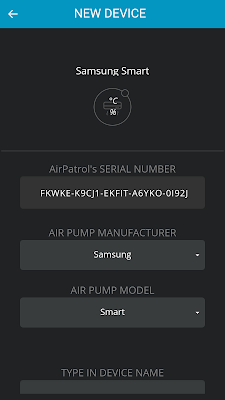
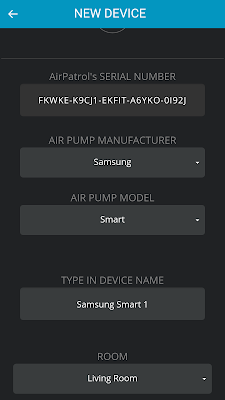
Tip: If you don't want to type in the lengthy serial number using your phone or a tablet keypad, write down the number using your laptop and send it to yourself via email, and copy-paste it directly into the input field.
The manufacturer of the climate control unit is copied from the settings you made in the initial setup. Name the device and define the room the device is in, and you are ready to go!
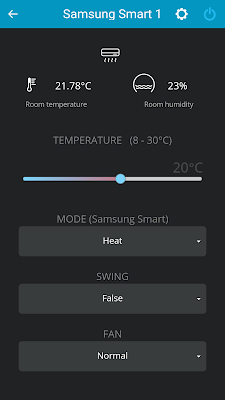
These are the basic features, but the real value comes from the fact that Cozify Hub allows you to control air conditioner automatically using motion detectors, door and window sensors, wireless temperature sensors, and several other Cozify Hub supported devices. Different modes of the air conditioner can be stored into a theme, allowing you to take your own preferred setting into use with a press of a single button. For example, you could have separate themes for cooling and heating without need to remember the setting you had before.
Tip: Schedule cooling or heating to begin 30 minutes before you wake up or arrive home from work or school. What a nice wake up or homecoming treat!
Tip: Set the air conditioner to begin the heating or cooling automatically when you arrive home (rule: when mobile at home, turn scene on). Or control the heat pump manually using a wall switch.
 When in a hurry, the front door is easily left open by accident. I love the possibility to leave it to Cozify Hub to automatically take care of controlling the air conditioner: It's rather expensive and frustrating to heat or cool the outdoors. Adjust the delay the way you want.
To create this rule, you need a door/window sensor for example from Centralite.
Another nice rule that adds the comfort of your home, is turning the air conditioner on only when someone is in the room.
"Turn on the cooling when motion is detected. And turn the cooling off when the room has been empty for 5 minutes."
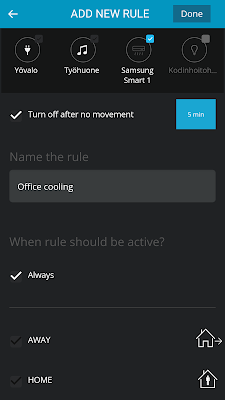
Like in the previous example, you can adjust the delay the way you want.
To create this rule, you need a motion sensor for example from Centralite.
Other examples of possible air conditioner related rules:
Order the AirPatrol WiFi from Cozify Store from here.
If you don't yet own a Cozify Hub, a nice way to start exploring how your smart home could improve your home safety and energy efficiency, is to begin with one of our well thought starter bundles.
AirPatrol WiFi
Ultimately the decision to user AirPatrol was easy. AirPatrol WiFi supports over 700 different air conditioner models from several different manufacturers. With one integration we were able to reach a truly comprehensive support for a wide selection of air conditioner models. Already own an air conditioner? Check the complete list of supported models here. It is important to take into account the fact that the support was implemented for only the AirPatrol WiFi version. SMS controlled GSM versions are not supported.
Setup and installation
Setting up the AirPatrol Wifi is easy and straightforward, and is done according to the instructions of manufacturer found in the AirPatrol WiFi sales package. Ensure that during the setup, the AirPatrol WiFi is connected to the same home network where Cozify Hub is connected to.Tip: Always before pairing 3rd party devices with Cozify hub, ensure that the device is working as expected using the manufacture's own mobile application.
When the AirPatrol WiFi is installed, you can pair the device with Cozify Hub.
Pairing is done by following these steps:
- Initialize the pairing by selecting the (+)-icon at the right top corner of the Devices screen
- Select ADD MANUALLY button
- Select Add WiFi devices (by technology) or AirPatrol (by manufacturer)
- Type in the AirPatrol WiFi serial number from the back of the device, and select OK
- Press the pairing button on the right side of the AirPatrol WiFi device
- And finally select the OK button


Tip: If you don't want to type in the lengthy serial number using your phone or a tablet keypad, write down the number using your laptop and send it to yourself via email, and copy-paste it directly into the input field.
The manufacturer of the climate control unit is copied from the settings you made in the initial setup. Name the device and define the room the device is in, and you are ready to go!
Use
Basic controlling of the air conditioner is done using the Cozify application. You can- Turn air conditioner on and off
- Set the mode to cooling, heating, fan, dry or auto
- Set the fan speed
- Turn swing mode on and off

These are the basic features, but the real value comes from the fact that Cozify Hub allows you to control air conditioner automatically using motion detectors, door and window sensors, wireless temperature sensors, and several other Cozify Hub supported devices. Different modes of the air conditioner can be stored into a theme, allowing you to take your own preferred setting into use with a press of a single button. For example, you could have separate themes for cooling and heating without need to remember the setting you had before.
Tip: Schedule cooling or heating to begin 30 minutes before you wake up or arrive home from work or school. What a nice wake up or homecoming treat!
Tip: Set the air conditioner to begin the heating or cooling automatically when you arrive home (rule: when mobile at home, turn scene on). Or control the heat pump manually using a wall switch.
A few examples of the rules
"Turn off the air conditioner if any of the home's exterior doors are open for more than 3 minutes. And turn on the heat pump when the door is closed."
To create this rule, you need a door/window sensor for example from Centralite.
Another nice rule that adds the comfort of your home, is turning the air conditioner on only when someone is in the room.
"Turn on the cooling when motion is detected. And turn the cooling off when the room has been empty for 5 minutes."

Like in the previous example, you can adjust the delay the way you want.
To create this rule, you need a motion sensor for example from Centralite.
Other examples of possible air conditioner related rules:
- Turn on the air conditioner (cooling or heating), when certain room temperature is exceeded or fallen below (the level can be defined freely)
- Turn on the air conditioner, when certain relative room humidity level is exceeded or fallen below (the level can be defined freely)
- Send notification (push, sms or email) when certain room temperature is exceeded or fallen below (the level can be defined freely)
- Send notification (push, sms or email) when certain relative room humidity level is exceeded or fallen below (the level can be defined freely)
- Turn a theme on or off based on the room temperature
- Turn a theme on or off based on the room relative humidity level
- Turn the air conditioner off automatically after 2 hours of use (set the time freely)
- Turn off the air conditioner if smoke is detected (requires smoke detector)
- Turn off the air conditioner if water is detected (requires water leak sensor)
Order the AirPatrol WiFi from Cozify Store from here.
If you don't yet own a Cozify Hub, a nice way to start exploring how your smart home could improve your home safety and energy efficiency, is to begin with one of our well thought starter bundles.
If you are interested in smart home and building automation, follow us, comment and share our blog.
Thursday, March 17, 2016
Cozify User Story - Home of a young couple

We've been using Cozify in our home for a little bit over a year now. I’ve grown to like the convenience that when the morning or night comes, I don’t need to walk through all the rooms to switch on or off all the individual lights separately. Especially for us who prefer atmospheric lighting, Cozify has given a flexible and convenient way to use individual lights in selected locations.

We have currently a total of 7 different individual lamps across the rooms and balcony in our apartment. This gives us creative and flexible possibilities to use lighting as part of decoration which is constantly evolving. If I’d need to manually to go to turn them on and off every time I 1) wake up, 2) leave the house, 3) return to the house and 4) go to sleep, it would require me to visit to switch those lights on and off 28 times during one day. If we left the house two times per day instead of one, the number would be a total of 42 times switches of lights per each day. It is 2016, and it should be easier, and it is.

You can automate traditional “non-smart” lamps ON and OFF via a smart power socket
Once we leave the house empty, we turn on the AWAY mode on our way out, and all the 7 lights go off + the Sonos music speaker if it’s on. Once we return home and open the door, the Nyce contact sensor tells Cozify to turn on the HOME -mode, switching on all the lights we want with desired settings regarding the time of the day. Once we go to sleep, I will set Cozify to NIGHT mode at the same as I put on the wake up for the next day from my mobile. In the morning as I shut down the phone’s alarm, I turn OFF the NIGHT mode, and all the lights are back on + music/radio in bathroom for a morning routine if we feel like it.

While still in AWAY mode, when you enter your home (by opening the door), the Nyce door sensor turns automatically ON the HOME mode
Of course, as soon as we’d get geo-location tags attached to our keys, going away from home could be also detected automatically, and I believe the geo-tag device support is coming still during this year to Cozify. But meanwhile, I will take the manual AWAY-switching using Cozify application anytime over the manual light switching across the rooms.
Another convenient use of lights in addition to switching them and off, or changing the mood according the time of the day, is at night. If there is movement in the hallway at night time (detected by the Nyce motion sensor), the desired set of lights turn ON and OFF automatically (dimmed at 20% brightness not to blind you in the dark) if one of us visits the bathroom.

Proove outdoor power socket enables controlling also your balcony’s traditional lights and for example heating.
It's also possible to decide when the lights are off, even if someone is at home - I’ve used Cozify’s timer function to turn off the balcony lights when there’s enough light outside. Proove‘s outdoor smart power socket does the job beautifully. Cozify knows when the sun rises and falls, and the balcony lights and some of our indoor lights’ timings are based on that. I have added one hour buffer for those events through Cozify, being: the lights go off 1 hour after the sunrise, and 1 hour before the sundown as the sun in Finland doesn’t often tend to be too bright.

Another fun example we have connected to Cozify is the Sonos wireless speaker which is located in the bathroom. With Proove remote switch I’m able to change a Spotify-playlist or radio channel in the speaker depending on what kind of mood I’m having - without the need to have my phone and Cozify mobile app there with me. Enjoying sauna is often an essential part of a Finnish house party and for that it is also convenient to have switchable music at hand at the sauna premises. I have three dedicated playlists attached to the Proove remote switch. One of them being called “saunaChill” which contains chill out songs to be played in random order while having sauna or in the mornings. If I've been listening music/radio, the speaker goes off automatically with the lights via Cozify’s AWAY-mode as we leave the house for work.
If we are on a holiday elsewhere, we know that everything in the house is fine. In case the front door would open while we are on holiday, or if the temperature or moisture levels (detected by the NyCe multi sensor) would change unexpectedly, Cozify would send us an sms or push notification to our mobile notifying about it. As the camera device support is about to be included to Cozify, via a video camera we will also see then remotely exactly what is happening in the house.
As we’ve grown to the convenience of having Cozify, it definitely is giving added value and convenience to our home experience making every day living more convenient and enjoyable. We’ve just scratched the surface so far regarding the possibilities Cozify. Cozify Hub will introduce a bunch of new features still during this year, such as the video camera support etc.
Here is our Cozify setup:


The total cost of this home automation setup of ours is 806.5 € . What is to be noted though is that over half of the price is formed by the powerful high fidelity speaker of Sonos and the decoration lights, which cost always - them being smart devices or not. The difference in them compared to traditional solutions is of course that they bring now more value and convenience as I have them all working and connected together through Cozify in the house.
One cool aspect is that once you’ve gotten your basic home automation up and running, adding affordable new features to it little by little makes the future of your home and living gradually even more convenient and evolving. Next I am waiting for the camera, and a way to more precisely detect when someone is at home and when not. In the near future I’m considering adding probably a couple of affordable 433 MHz wall switches to control the Cozify’s currently manually controlled AWAY and NIGHT modes. There's also newly added security devices such as water leak detector, which as a home owner I'm motivated to setup next to our washing machine and fridge.
If you are interested in smart home and building automation, follow us, comment and share our blog.
Subscribe to:
Posts (Atom)
Cozify’s blog covers topical issues related to smart living, construction and property management. Articles come from our own team as well as other experts in the field.
You are welcome to read and comment!
#smarthome #smartconstruction #smartproperty management